Tuesday, October 20, 2015
Sunday, October 18, 2015
A New Torah
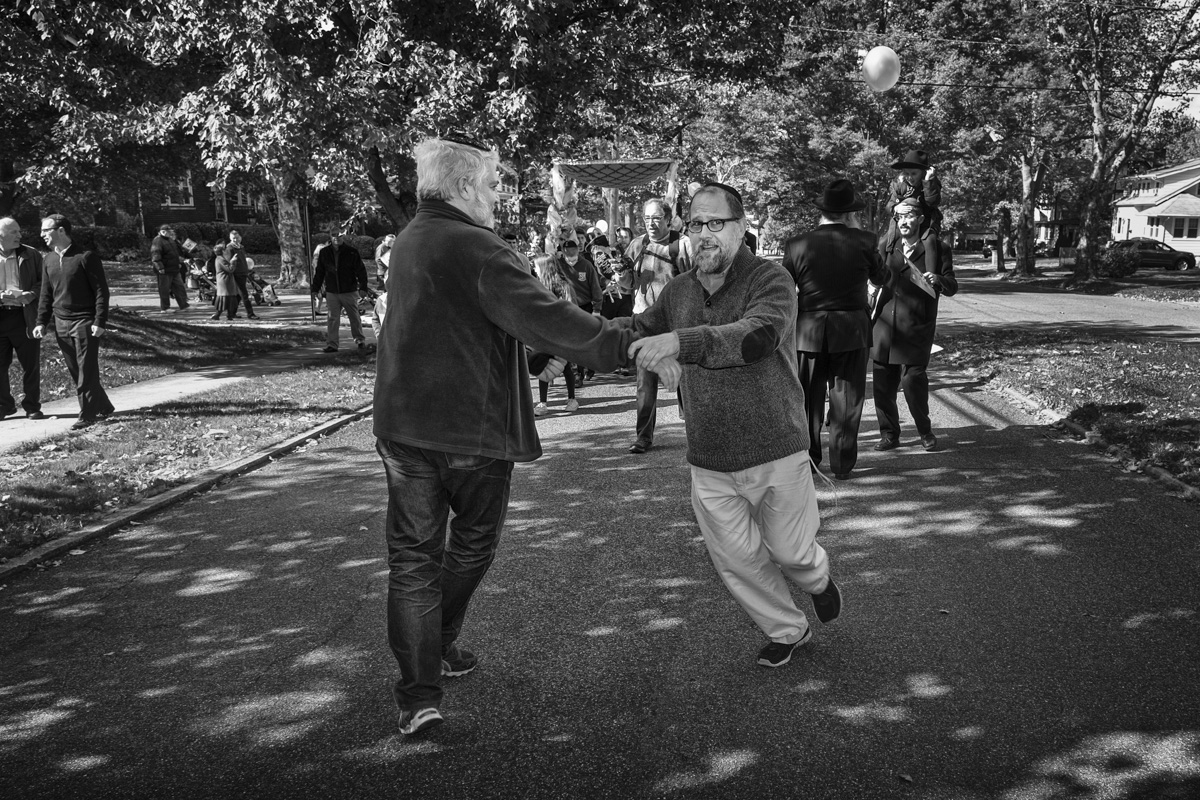
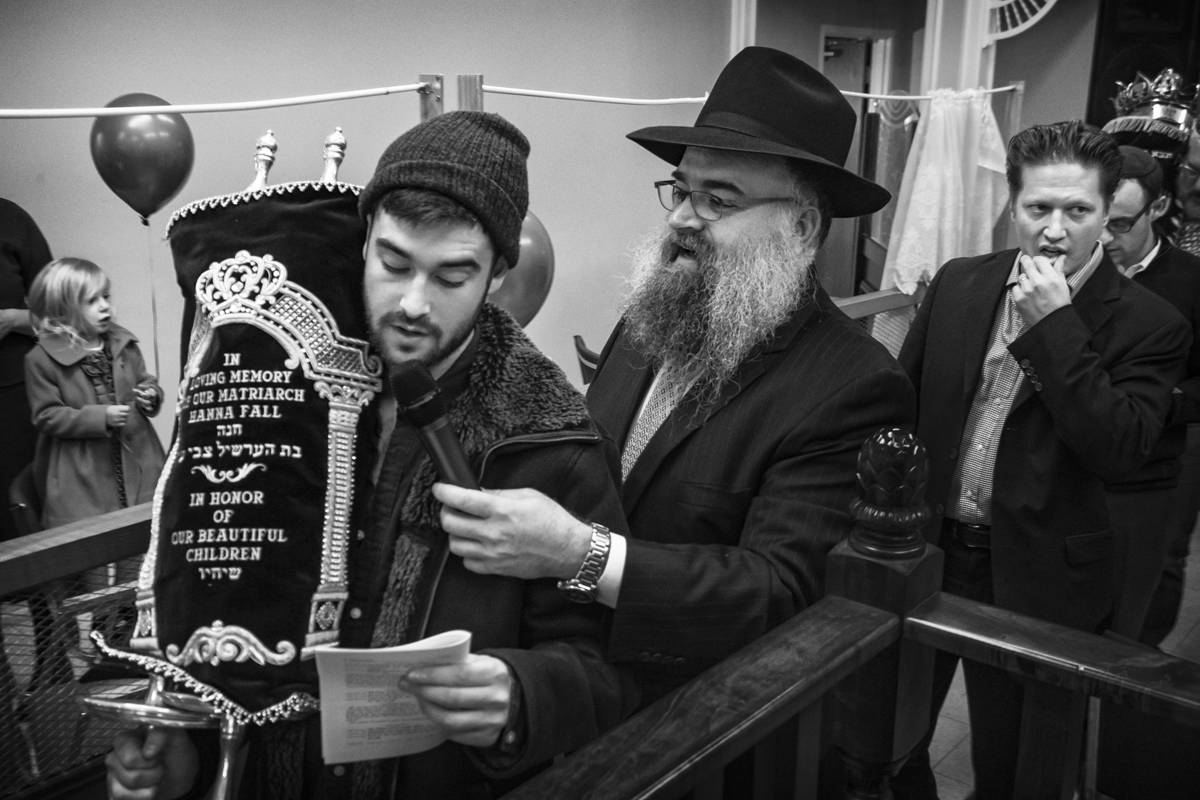
I happened to stop by the Chai Center cheder this morning to deliver some photos. When I said hello to the rabbi, he invited me to a Torah celebration at his brother's synagogue. His congregation was writing the last few lines of a newTorah and bringing it to the synagogue to place in the holy ark.This is a celebration of the most important and most deeply loved book in Judaism. The wisdom written in these scrolls is the source of all other rabbinic commentary found in the Mishna, Gemara, Maimonides' Mishna Torah, Rabbi Zalman's Tanya, and many other texts. The completion and installation of a Torah is and event of great joy and celebration.
I've had opportunity to photograph the completion of the last words of the Torah and posted about it in the past (unfortunately the photos were deleted from my Google account). But I've not had the chance to photograph marching with the Torah under a chuppah through the streets. There was a truck playing music preceding us and many neighbors came outside to watch the procession of members of the congregation dancing and marching in the street.
Thursday, October 15, 2015
The Lesson
In public school and liberal arts college I hated being a student. In spite of, or perhaps because of, everyone's expectations of me I was a mediocre student. The only courses in which I excelled were music. No surprise there. After I returned to NYC from Nashville I set my mind to studying at a music conservatory. I sailed through the courses for both my artist diploma and master of music degrees. I still don't like formalized education, but really enjoy one-on-one learning.
At the Chabad center where I've been well received and allowed to pursue my photo project I attend a small class on Tanya - the treatise that lays out the basis of the Chabad Lubavitch movement, and Tanakh - the study of the Hebrew Bible. Everything is fertile territory for my photography.
Sunday, October 11, 2015
Sunday at Cheder - part 3
After Simchat Torah the emphasis of lessons is on the creation story of Adam and Eve, and how civilization went to hell in a hand basket, but was redeemed by Noah. According to Jewish tradition, at the dawn of human history G-d gave mankind seven rules to follow. At the heart of this moral code is the acknowledgement that morality must be predicated on a belief in a higher power to whom we are responsible. Unless we recognize this we will not transcend the selfishness of our character. If mankind is the final arbiter of right and wrong, then right will be what he desires. At Mount Sinai,
G-d gave the Israelites a mission to serve as His 'light unto the nations'. That mission was based on the seven Noahide Laws (given to Noah at the end of the biblical flood) that are comprehensive, but only a base upon which each people should build. They should be familiar:
1) Do not deny G-d.
2) Do not blaspheme G-d.
3) Respect human life, do not murder.
4) Respect the institution of marriage.
5) Respect the rights and property of others. Do not steal.
6) Respect G-d's creatures.
7) Maintain justice. When we right the wrongs of society, we are partners in the act of sustaining creation.
That's what these kids were learning about in school today.
G-d gave the Israelites a mission to serve as His 'light unto the nations'. That mission was based on the seven Noahide Laws (given to Noah at the end of the biblical flood) that are comprehensive, but only a base upon which each people should build. They should be familiar:
1) Do not deny G-d.
2) Do not blaspheme G-d.
3) Respect human life, do not murder.
4) Respect the institution of marriage.
5) Respect the rights and property of others. Do not steal.
6) Respect G-d's creatures.
7) Maintain justice. When we right the wrongs of society, we are partners in the act of sustaining creation.
That's what these kids were learning about in school today.
Thursday, October 8, 2015
Tuesday, October 6, 2015
Sunday at Cheder - part 1
I've been looking for the opportunity to spend some time photographing kids learning about their cultural and religious heritage in a Jewish day school (cheder). In hasidic communities the schools meet five or six days a week. My own experience was two afternoons a week after regular public school which is more common in suburbia. This past Sunday, during the Hashanah Rabba celebration I previously posted, the cheder was in session and was followed by a Sukkat party for the kids to make miniature sukkas out of graham crackers and marshmallow spread. They didn't last long.
'Okay, okay, I cheated ....'
Sunday, October 4, 2015
Sukkat part 3 - Hashanah Rabbah
At the end of the Sukkat festival the Autumn holiday season comes to a close. The last day of Sukkat is called Hashanah Rabbah. It's followed by two more days of observance - the first is Shimeni Atzeret and the second is Simchat Torah. It's on the second of these that the last verses of Deuteronomy are read, the scrolls are rewound, and the first verses of Genesis are read to begin the cycle anew. There's a huge celebration with everyone dancing (with and without the torah scrolls in hand). Unfortunately, the observance of the holiday prohibits any work, including taking of photographs.
These are photos of Hashanah Rabbah. Since it's the final day of Sukkat, the ritual of the 'four kinds' is still observed, as depicted in the third of the photos. The four are willow, myrtle, palm, and citron (etrog). Explained here much better than I could hope to do.
Subscribe to:
Posts (Atom)